
Is an e-car or combustion engine more worthwhile?

The switch from combustion engines to electric cars is still a difficult topic for many drivers. Apart from the life cycle assessment, it is also about very individual concerns. The question is: Is an e-car worth it for me? We compare e-cars and combustion engines and show you which drive is associated with which costs - and what you actually have to take into account.
Since the announcement of the new e-car bonus, the thought of switching to an electric car has certainly become easier for some. After all, some money can be saved.
All information about e-car subsidies
⏰ In a nutshell
- E-cars are increasingly worthwhile
- Fuel prices will continue to rise
- Private charging pays off
- No vehicle tax for e-cars until 2030
- E-car ideal for the city
If you are interested in an electric car, we have summarized the best electric car offers for you here:
| Model | Offers from | |
| Skoda Elroq | €37,318 | Compare offers |
| Cupra Born | €31,383 | Compare offers |
| Dacia Spring | €14,299 | Compare offers |
| Kia EV3 | 29.103 € | Compare offers |
| Hyundai Inster | 21.862 € | Compare offers |
Purchase price – Are electric cars more expensive than combustion engines?
One of the reasons why many drivers have not yet opted for an electric car is the high purchase price. With the new environmental bonus, however, electric cars will become more attractive again. Always attractive: Chinese car brands! They bring a lot of Chinese electric cars into the country and offer them at very good prices.
E-car subsidy: From 01.01.2026 it will be available again!
Since January 1, 2026, private individuals have benefited from a new state subsidy when buying or leasing a new electric car, plug-in hybrid or vehicle with a range extender. The premium is between €1,500 and €6,000 and depends on the type of vehicle as well as personal factors such as income and the number of children in the household.
Specific criteria apply to the receipt of funding:
- Income limits: The taxable annual household income may not exceed €80,000.
- Technical specifications: Plug-in hybrids must drive at least 80 km purely electrically or have CO2 emissions of no more than 60 g/km.
- Holding period: The vehicle must be kept for at least 36 months.
Detailed information and all eligible models can be found on our page on the e-car premium.
Will e-cars soon become cheaper?
Now that the ban on internal combustion engines has been decided for 2035, the electric car seems to be the future. However, to ensure that the switch is attractive for the masses of people even before that, there is no way around a price reduction in the long term. Especially if you want to hold your own against the competition from China - these price reductions are now available in the form of state subsidies and through extra discounts from the manufacturers, even households that are not eligible for subsidies can benefit in some cases.
Affordable small electric cars would be particularly important. In recent years, manufacturers have already presented some concepts that are soon to be launched on the market - electric cars under 20,000 euros, a price that could now really appeal to the masses.
Furthermore, the gap between Chinese and European manufacturers will close again somewhat, because with the entry into force of the punitive tariffs for Chinese e-cars, the price has also increased there.
Why are German e-cars so expensive?
Chinese manufacturers show that the purchase price for e-cars does not have to be exorbitantly high. But why are German car brands so expensive? On the one hand, it is because competition is enormously high in China and therefore prices must be kept as low as possible. The high price level in Europe brings large margins for China and at the same time vehicle prices are still lower than those of European manufacturers.
Wage costs and other operating costs such as rent or electricity are also significantly higher in this country, which is why German e-cars are very expensive in comparison.
E-car or combustion engine – running costs
When we talk about a cost comparison of electric cars against combustion engines, it means that the total costs must be taken into account. So not only the purchase price plays a role, but also costs for electricity or gasoline, insurance, tax and maintenance.

Electricity prices vs. fuel prices – which is more expensive
The prices for gasoline and diesel have currently leveled off again - but are at a quite high level. This will not get any better in the future, because the CO2 tax will be raised annually. Accordingly, saving fuel is the order of the day for most people – is an e-car worthwhile in this respect?
The price of a litre of E10 petrol is currently €1.74 on average (as of January 2026), diesel costs €1.68. It's not quite so easy with electricity, because it depends a lot on whether you charge at home at the wallbox, at the socket or on the go at a fast-charging station. Of course, the prices for electricity have also risen and the issue of charging loss should not be overlooked when charging an e-car.
Cost comparison for private charging
If you can charge at home, you have a lot of advantages, because electricity is much cheaper than at a public charging station, you can conveniently charge at the wallbox on your doorstep and an e-car can be worthwhile even without a photovoltaic system. As of January 2026, the average price for a kilowatt hour is around 30 cents.
Let's say you drive a Dacia Spring with a net battery capacity of 27.4 kWh. The consumption for the weaker engine version is given by the manufacturer as 13.8 kWh per 100 kilometers. According to the ADAC, the charging loss is 5.9 kWh, which means that 33.3 kWh of electricity is needed for a full charge. These would cost just under 10 euros at an assumed 30 cents per kWh.
Cost comparison for public charging
Public charging stations can be AC charging or DC charging. If you have to charge the Spring on the go, it will be more expensive, because the charging rates in the big cities are usually between 40 and 50 cents for AC charging, and even between 60 and 70 cents for DC charging. Since the Spring does not have a fast charging option, we expect 45 cents per kWh for AC charging. Accordingly, public charging will cost you just under 15 euros.
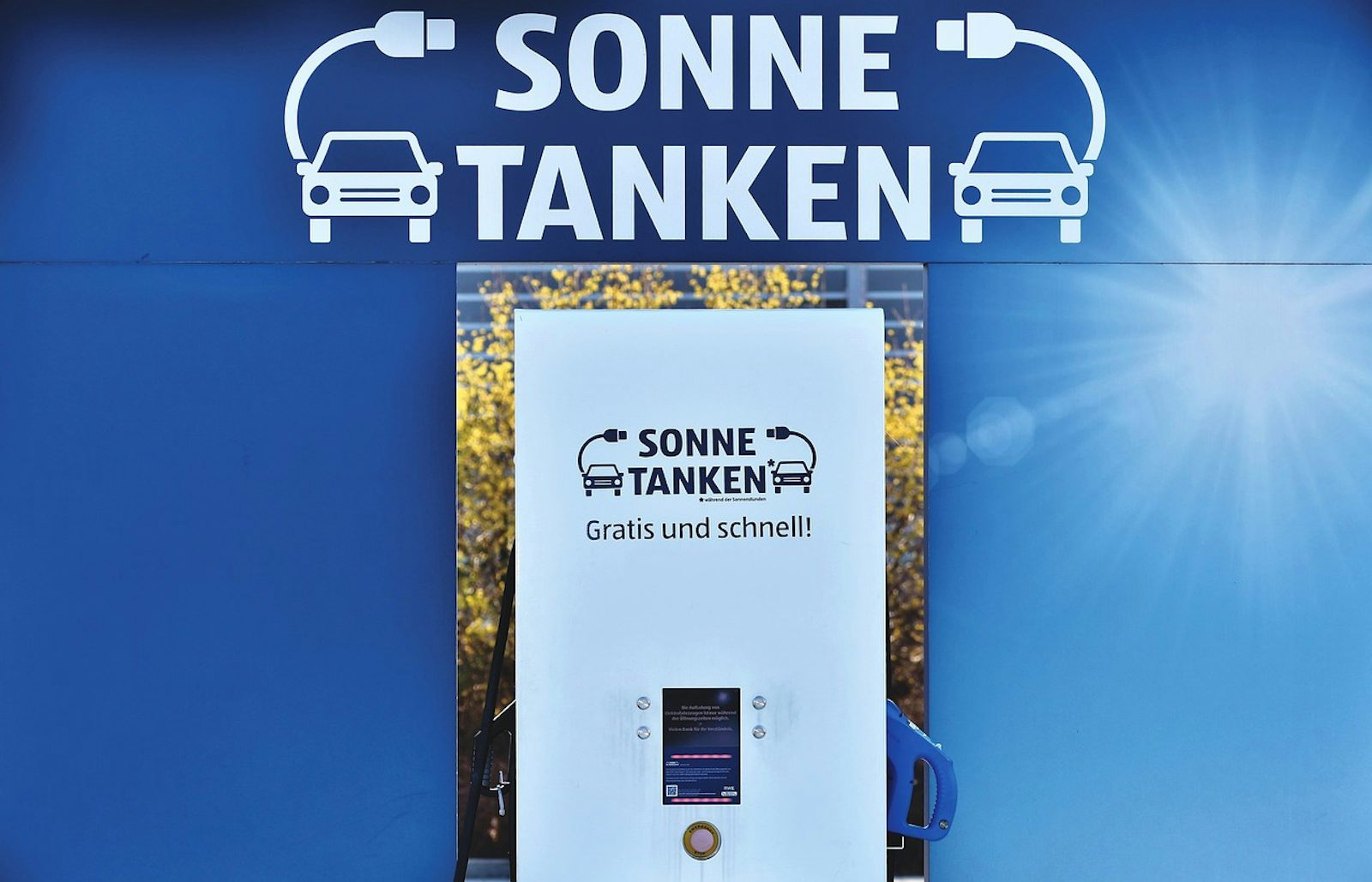
Unfortunately, only a few free charging stations are still offered.
Are there differences in insurance?
The biggest difference between combustion engines and e-cars in terms of insurance is the battery – it is expensive and should be insured. That's why there are special electric car insurance policies.
Is the vehicle tax for e-cars lower than for combustion engines?
Electric cars are completely exempt from motor vehicle tax until 31.12.2030. The tax for e-cars as company cars is also significantly lower.
Repairs, maintenance and service – are there any differences?
The structure of an electric car is less complex than that of a combustion engine. The electric car transmission consists of significantly fewer parts and no fluids such as engine oil or radiator fluid are needed. Accordingly, the maintenance of an e-car is also cheaper.
Due to the fact that significantly fewer components are installed in an electric car, there is also less damage. Repairs in electric cars usually concern brakes or battery, but this can be relatively expensive in the event of damage. Marten bites should not be underestimated either, because if a high-voltage cable has to be replaced, it is expensive.
Some workshops are not yet specialized in e-cars and you have to go to specialist workshops, which are even more expensive.
What other cost advantages are there for e-cars?
In some cities, there are free parking spaces for electric cars and some streets that are prohibited for combustion engines may be used by e-cars. But this is not generally the case, pay attention to the appropriate traffic signs that allow you to do so.

Conclusion: From how many kilometers is an e-car worthwhile?
In October 2025, the ADAC published a study that includes a very comprehensive total cost calculation for e-cars, plug-in hybrids and combustion engines. If all the costs of a car are taken together – i.e. operating and maintenance costs and depreciation in addition to the purchase price – petrol and diesel engines are usually still cheaper. But that depends heavily on the model.
Of course, e-cars have fallen in price compared to previous years, but they still tend to be more expensive than comparable combustion engines. This is likely to change in the course of the e-car subsidy, but the figures from recent months showed higher depreciation and, above all, higher costs for public charging.
Interestingly, in the ADAC comparison, there were definitely e-cars, especially in the mid-range, that were cheaper than comparable combustion models when looking at the total costs. However, only if the purchase price was already at a comparable level. With an assumed electricity price of 60 cents/kWh, e-cars had no chance against combustion engines in the overall bill – the cheaper the electricity price becomes, the better it looks.
Is an e-car worthwhile for infrequent drivers?
Especially if you only drive short distances and are mostly on the road in the city, an electric car is the best choice. Here you can also take a small model, which is cheaper in purchase price. The charging infrastructure in cities is also already very well developed, so you usually have good access to charging stations. Maybe you are also looking at an electric VW Touran alternative for the family.
Is an electric car without your own photovoltaic system worthwhile?
Anyone who owns a photovoltaic system and buys an e-car can benefit enormously. The unused electricity can be used for charging and does not have to be fed into the power grid. Accordingly, you can charge electricity for free on sunny days.
But even if you don't have a PV system, an e-car is worthwhile. Also take a look at special e-car electricity tariffs, here you can get away even cheaper.
Is the resale value of an electric car or combustion engine better?
Currently, there is a relatively high level of uncertainty about the loss of value of e-cars. If you want to sell a used electric car, it can be difficult. There is no rule of thumb for how much an electric car is worth over time, because that depends on many factors, of course. However, it can be said that the loss of value – as with combustion engines – is greatest in the first year. It is assumed that 25 percent will take place.
After three years, the value of the electric car is still around 60 percent of the list price. This puts the electric car in a slightly better position than the combustion engine, which ends up at about 50 percent of the list price after three years.
However, if there is accident damage or the battery has problems, the tide can turn quickly. If the prices for new e-cars fall or the manufacturers offer larger premiums for new cars, it may be more worthwhile for buyers to buy a new car right away.
Is e-car leasing worthwhile?
Leasing an electric car can definitely be worthwhile, because with rapid technological progress, the car may be old again after a few years and then you can simply return it after the term. You can find the best leasing offers for electric cars at Carwow.
With the new subsidy, you can also save on leasing an e-car.
source : https://www.carwow.de/automagazin/elektroauto/elektroauto-fahren/lohnt-e-auto-oder-verbrenner

Posting Komentar